Costs and pricing
Compare PPC agency management fees and media budgets before you sign
A commercial guide to PPC agencies costs and pricing in the UK, covering fee models, management rates, media budgets, hidden extras and how to compare quotes fairly.
What to take away
- PPC agencies costs and pricing means the total you pay a paid-search agency to plan, run and report on campaigns, split into a management fee and the media budget that goes to the ad platform.
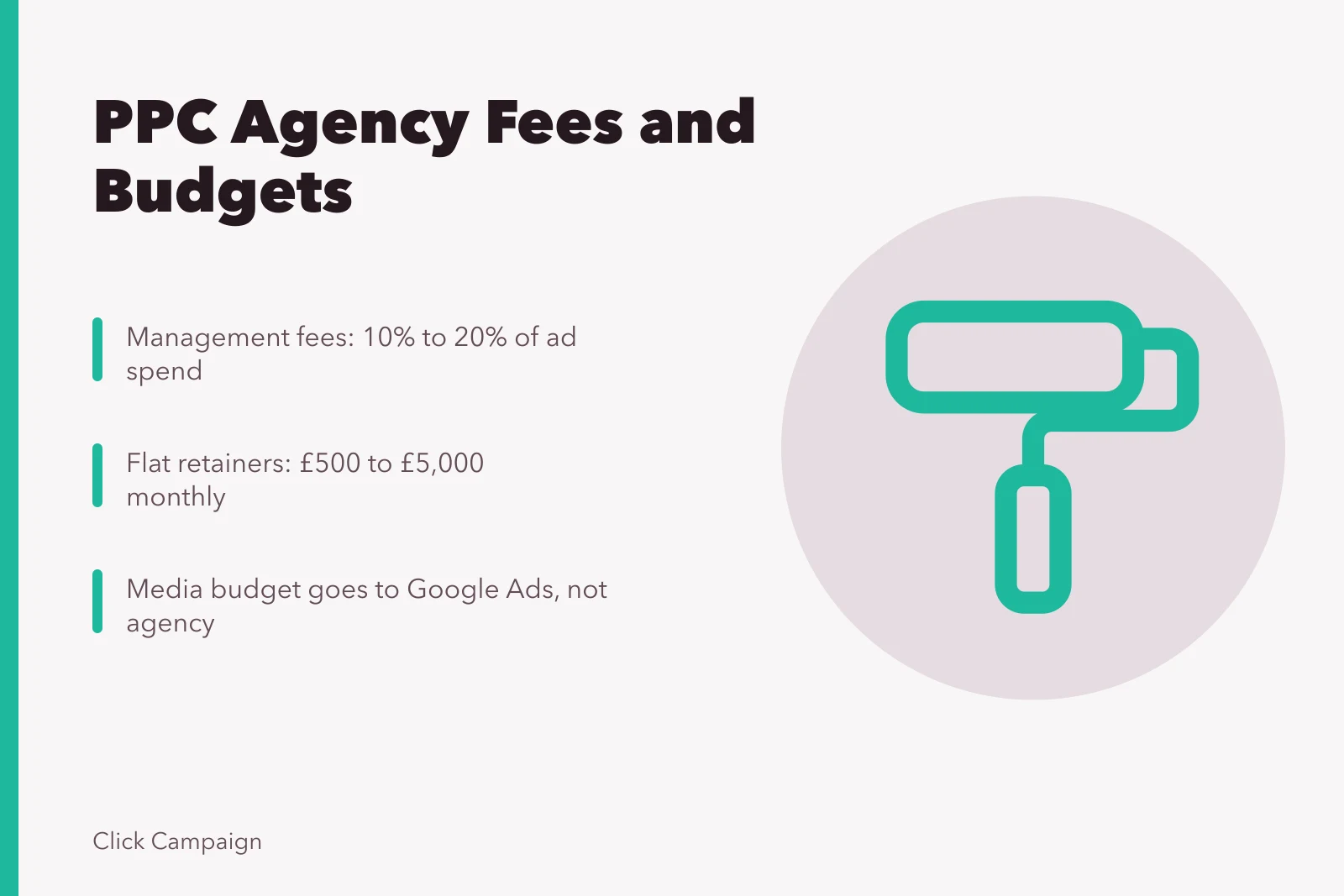
- Management fees in the UK commonly sit between 10% and 20% of ad spend, or as a fixed monthly retainer of roughly £500 to £5,000 depending on scope.
- Small accounts are usually charged a flat retainer because a percentage of a £2,000 budget does not cover the hours involved.
- The media budget is separate and is paid to Google, Microsoft or another platform, not to the agency.
- Setup fees, reporting tools, landing page work and contract notice periods are the costs most often missed when comparing quotes.
PPC agencies costs and pricing describes the money an advertiser pays a paid-search agency for managing campaigns, plus the separate budget spent on the ad platforms themselves. This guide sets out how those two figures are built, what UK rates look like, and how to compare proposals on the same basis.
The two numbers behind every PPC quote
Every proposal contains a management fee and a media budget. They are not the same thing and should never be blended in a single figure.
Management Fee vs Media Budget
Management fee
- What it pays for
- People and process
- Who keeps it
- Agency
- Example split
- £500
Media budget
- What it pays for
- Clicks on platforms
- Who keeps it
- Google or platform
- Example split
- £2,500
The management fee pays for people and process: strategy, keyword research, bid management, ad copy, reporting and meetings. The media budget is the money handed to Google Ads, Microsoft Advertising or another platform to buy clicks. An agency never keeps the media budget, though it may handle the billing.
When a supplier quotes "£3,000 a month", ask which pot that comes from. A £3,000 figure that includes £2,500 of media leaves only £500 of management, which buys very few hours.
How UK agencies structure their fees
Percentage of ad spend is the most common model. The agency takes a slice of what you spend on media, so its income rises as the account grows.
PPC Agency Fee Models
Percentage of spend
- How it works
- Slice of media spend
- Risk shifted
- Rewards growth
- Watch out for
- Encourages higher spend
Flat retainer
- How it works
- Fixed monthly sum
- Risk shifted
- Rewards efficiency
- Watch out for
- May cap ambition
Performance or hybrid
- How it works
- Fee tied to results
- Risk shifted
- Aligns interests
- Watch out for
- Needs clean tracking
Flat retainers suit smaller accounts. You pay a fixed sum each month regardless of spend, which makes budgeting simple and keeps the agency focused on efficiency rather than volume.
Performance or commission models tie part of the fee to results, such as a target cost per acquisition or a share of revenue. Hybrid models blend a lower retainer with a percentage or bonus.
Each model shifts risk. Percentage deals reward growth but can encourage higher spend. Retainers reward efficiency but may cap ambition. Performance deals align interests but need clean tracking to be fair. Our breakdown of how agencies choose between percentage and retainer pricing explains where each model tends to fit.
Typical management fee ranges
UK agencies rarely publish rate cards, so treat the figures below as labelled illustrative examples rather than market averages.
Typical Management Fee Ranges
Monthly ad spend
- Under £2,000
- Flat retainer
- £2,000 to £10,000
- 15% to 20%
- £10,000 to £50,000
- 10% to 15%
- £50,000 to £200,000
- 8% to 12%
- Above £200,000
- Negotiated 5% to 10%
Common fee basis
- Under £2,000
- £500 to £900
- £2,000 to £10,000
- £300 to £2,000
- £10,000 to £50,000
- £1,000 to £7,500
- £50,000 to £200,000
- £4,000 to £24,000
- Above £200,000
- £10,000 and upwards
Illustrative monthly fee
- Under £2,000
- £2,000 to £10,000
- £10,000 to £50,000
- £50,000 to £200,000
- Above £200,000
For example, a team paying £400 a month in management on a £2,000 media budget is on a 20% arrangement. The same team moving to £20,000 of spend might expect a fee of £2,000 to £3,000 at 10% to 15%.
Minimum fees matter. Most agencies will not take on an account below a floor, often £500 a month, because onboarding alone consumes several hours.
What the media budget covers
Media budget is spent on clicks, impressions and conversions across search, shopping and performance channels. On Google Ads, most advertisers pay per click through an auction, so the cost of a click varies by keyword, competition and quality.
What the Media Budget Covers
- Clicks, impressions and conversions
- Search, shopping and performance channels
- Performance Max and shopping feeds
- Remarketing lists
- Microsoft, Amazon or social spend
- Platform billing or agency pass-through
Budget also covers platform features such as Performance Max campaigns, shopping feeds and remarketing lists. Some spend goes to Microsoft Advertising, Amazon Ads or social platforms if the agency runs a wider paid media remit.
Media budget is usually billed to the advertiser's own payment method, or invoiced by the agency with the platform cost passed through. Ask which, because it affects cash flow and whether you keep ownership of the account.
Setup, onboarding and one-off costs
Many agencies charge a setup fee for account audits, tracking implementation and campaign build. An illustrative example is £1,000 to £3,000 for a new account, or a full month's retainer.
Setup and Onboarding Costs
- £1,000 to £3,000Illustrative setup fee for a new account
- One full month's retainerAlternative setup charge
- Account audits, tracking, campaign buildWhat setup usually covers
Tracking work often sits here. Correct conversion measurement depends on events firing properly, and Google's own guidance on setting up ecommerce events in GA4 shows the level of detail involved. If your site needs development time, that cost may fall outside the agency fee.
Landing pages, creative assets and feed management can be quoted separately. Ask for a written list of what is included before signing.
Hidden costs that appear after month one
Reporting dashboards, call tracking, heat-mapping tools and third-party bid software are often billed as extras. So are additional channels added mid-contract.
Hidden Costs to Check
- Reporting dashboards and call tracking
- Heat-mapping and third-party bid software
- Channels added mid-contract
- Notice period and lock-in
- Staff changes and scope creep
- Out-of-hours requests
Contract terms carry their own cost. A twelve-month term with 90 days' notice means you may pay for a quarter after deciding to leave. Rolling monthly terms cost more per month but reduce lock-in.
Staff changes, scope creep and out-of-hours requests can trigger additional fees. A clear scope document is cheaper than a dispute. Our review of the hidden costs that rarely appear in proposals lists the items to check line by line.
Before and after: what changes when you switch agency
Switching supplier usually changes the fee basis as well as the amount. The table below uses labelled illustrative figures for a business spending £15,000 a month on media.
Costs Before and After Switching
Before: in-house or old agency
- Management fee
- £1,200 fixed retainer
- Media budget
- £15,000
- Setup fee
- None
- Reporting tools
- Spreadsheet, free
- Contract
- Rolling monthly
- Total first month
- £16,200
- Total ongoing month
- £16,200
After: new agency
- Management fee
- £2,250 at 15%
- Media budget
- £15,000
- Setup fee
- £2,000 one-off
- Reporting tools
- £150 a month
- Contract
- 12 months, 60 days' notice
- Total first month
- £19,400
- Total ongoing month
- £17,400
| Item | Before: in-house or old agency | After: new agency | | Management fee | £1,200 fixed retainer | £2,250 at 15% of spend | | Media budget | £15,000 | £15,000 | | Setup fee | None | £2,000 one-off | | Reporting tools | Spreadsheet, free | £150 a month | | Contract | Rolling monthly | 12 months, 60 days' notice | | Total first month | £16,200 | £19,400 | | Total ongoing month | £16,200 | £17,400 |
The new arrangement costs more each month but includes tracking work, tooling and a defined scope. Whether that is worth it depends on the return the account generates, which is the subject of our guide to measuring PPC return on investment in England.
Benchmarks from the ad platforms themselves
Platform documentation is the most reliable public source for cost assumptions, because it describes how pricing is set rather than what an agency charges.
LinkedIn publishes its own advertising costs and pricing structure, which is useful when a proposal includes LinkedIn spend alongside search. Meta's professional certification exams are a way to check whether an agency's team holds recognised platform credentials.
These sources do not give UK agency rates. They give the cost mechanics you can use to sanity-check a media plan.
Questions to ask before you sign
Ask how the fee is calculated, what happens if spend rises or falls, and whether the fee is capped. Ask who owns the ad accounts and whether you keep them on exit.
Ask what is excluded from the retainer and how extras are priced. Ask for the notice period in writing, and for the reporting format you will receive each month.
Ask how the agency measures success beyond spend and clicks. The CIPD's guidance on using people analytics for decision-making is written for HR teams, but its principle applies to PPC: define the decision the data will inform before you collect it.
Compliance and claims in your ads
Paid search copy is advertising, and the rules apply. The Advertising Standards Authority's AdviceOnline library for marketers sets out what claims need substantiation, which matters if your agency writes price or performance promises into ad text.
This is a cost issue because non-compliant ads get pulled, wasting media budget and management time. Brief your agency on what you can and cannot claim, and keep evidence for anything specific.
How to compare two quotes fairly
Put both proposals into the same table: management fee, media budget, setup, tools, contract length and notice. Normalise the fee to a percentage of media spend so the basis is visible.
Then estimate total twelve-month cost, not monthly cost. A lower monthly fee with a £3,000 setup and a 12-month lock-in can cost more than a higher fee on a rolling term.
Finally, check the assumptions. A quote based on £10,000 of spend is not comparable with one based on £25,000, because fee percentages usually fall as budgets rise. Our cost guide with its underlying sources shows how to document those assumptions so the comparison holds.
Where costs are heading
Automation is changing what agencies charge for. Manual bid management is less of a billable task, while data engineering, feed work and creative testing take more time.
That shift tends to push fees towards retainers and project work, and away from pure percentages. It also raises the value of measurement skills, because automated campaigns still need clean conversion data to learn from.
Expect more agencies to quote a platform fee plus a technology fee, and to charge separately for work on retail media and AI-assisted creative. Our outlook for PPC agency trends in England in 2027 covers how those changes may affect pricing.
Budgeting for the first year
Build the first-year budget from four lines: setup, management fees, media, and tools or extras. Add a contingency of around 10% for scope changes.
Review at month three and month six. If the account is performing, you may want to raise media spend, which usually lowers the effective fee percentage. If it is not, you want the option to leave without paying for a quarter you will not use.
Write the fee basis into the contract, including what happens at renewal. That single step prevents most disputes about PPC agencies costs and pricing.
Common questions
Is a percentage of ad spend or a retainer cheaper?
For a small account, a retainer is usually cheaper because a percentage of a low budget does not cover the agency's hours. For larger accounts, a percentage can be better value because the fee scales with the work. Compare both on a twelve-month total.
Does the management fee include the media budget?
No. The management fee pays the agency for its work. The media budget is spent on the ad platforms and is separate, even when the agency invoices you for both on one bill.
What is a reasonable minimum monthly fee?
Most UK agencies set a floor, often around £500 a month for a small account, because onboarding and reporting take a fixed amount of time. Below that, some agencies decline the work or offer a self-serve product instead.
Can I pay an agency only on results?
Some agencies offer performance or hybrid models, but they depend on reliable conversion tracking and a clear definition of a qualified lead or sale. Pure pay-on-results deals are rare because the agency carries most of the risk.
In this guide
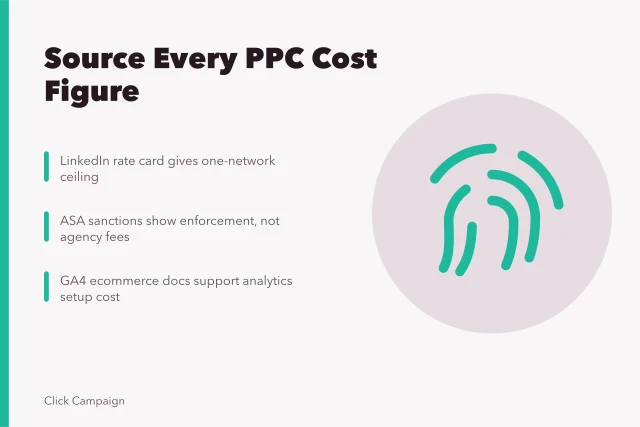
- A PPC agencies cost guide only works if the sources are namedHow to build a PPC agencies cost guide from citable sources: platform rate cards, sanctions records and analytics setup, plus a scoring rubric for each figure.
- When to switch between PPC agencies pricing modelsA comparison of PPC agencies pricing models, the evidence that justifies each, switching triggers to watch and a before and after view of what changes.
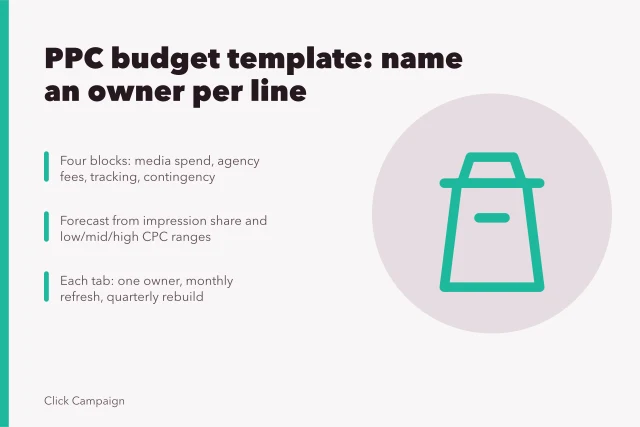
- why a PPC agencies budget template needs named owners on every lineA working PPC agencies budget template splits spend, fees and tracking costs, then shows who owns each line. This guide sets out what to put in each tab.
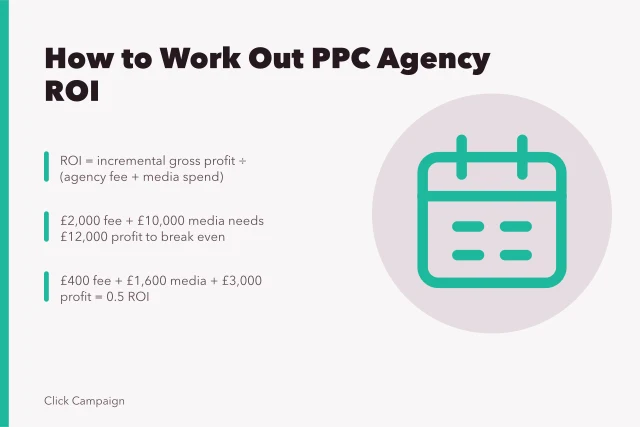
- How do you work out PPC agencies return on investment?A step-by-step method for working out PPC agency return on investment in England, with labelled figures, a decision table and the data that keeps the sums honest.
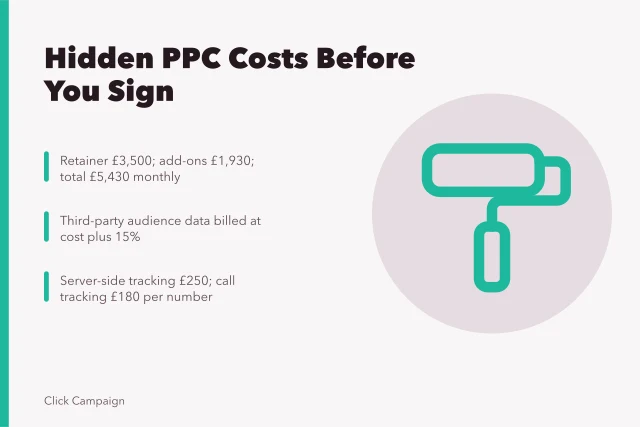
- Before you sign, check the PPC agencies hidden costs in the paperworkPPC agencies hidden costs that buyers should check before signing, covering data licensing, tracking, media mix and the sources behind each figure.