Costs and pricing
Part of Compare PPC agency management fees and media budgets before you sign
why a PPC agencies budget template needs named owners on every line
A working PPC agencies budget template splits spend, fees and tracking costs, then shows who owns each line. This guide sets out what to put in each tab.
What to take away
Picture a Bristol retailer with a £30,000 quarterly paid search budget that finishes November £4,200 over plan (both figures illustrative). The spreadsheet was tidy. The assumptions underneath it were not.
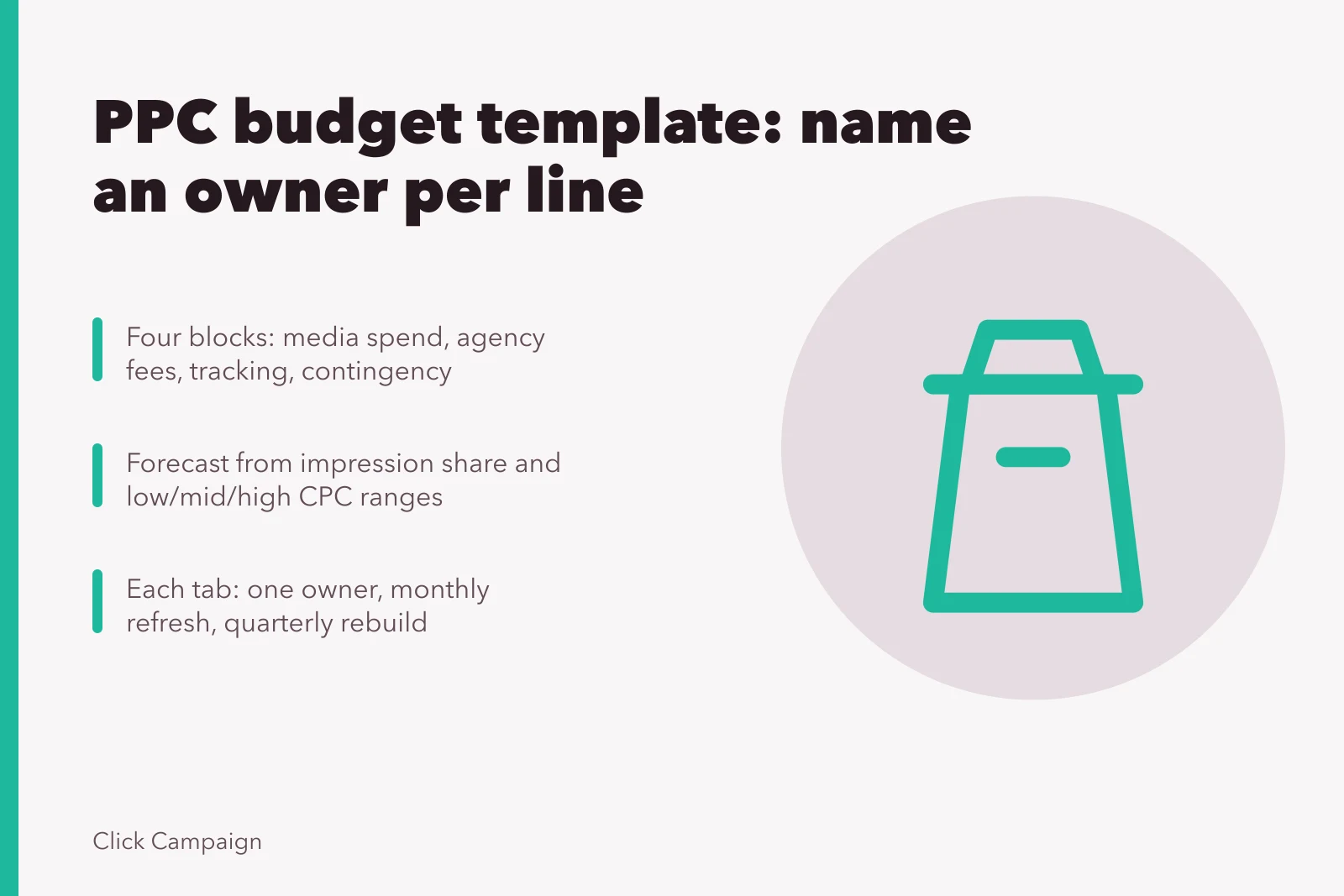
- Build four blocksmedia spend, agency fees, tracking and consent costs, contingency.
- Forecast spend from impression share and CPC ranges, not one blended average.
- Give every line an owner, a source and a review date.
- Label VAT, currency and billing entity on each tab.
- Keep one page per quarter and archive the rest.
What to put in a PPC agencies budget template
Four blocks that cover most paid search budgets
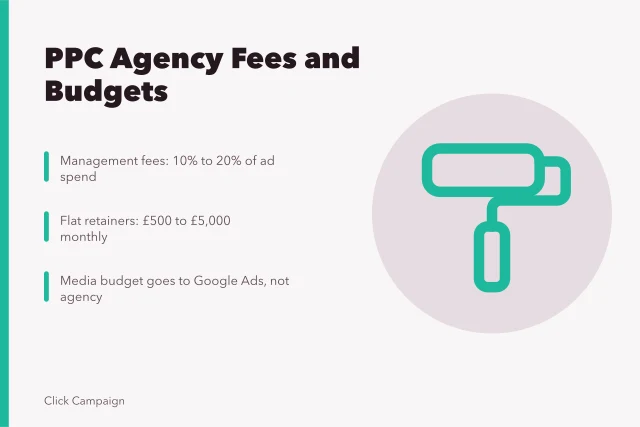
Media spend is the block teams get right first, as platform billing is visible. Agency fees sit beside it: retainer, performance element or a blend of both.
Four blocks for paid search budgets
- Media spendplatform billing, visible first
- Agency feesretainer, performance or blend
- Tracking and consentsmaller, easier to forget
- Contingencyauction inflation and unapproved tests
- Total all four on a summary tab
Tracking and consent costs are smaller but easier to forget, while contingency absorbs auction inflation and tests nobody formally approved. Keep the four blocks apart and total them on a summary tab. Name the block on the tab, so nobody guesses whether a row is media or fee.
Line items finance will ask about
Finance will ask about VAT treatment, invoice currency and which entity bills per platform.
Add a column for the month each cost is expected to land, since platform billing and agency invoicing rarely share a date.
Add one for who approved the line.
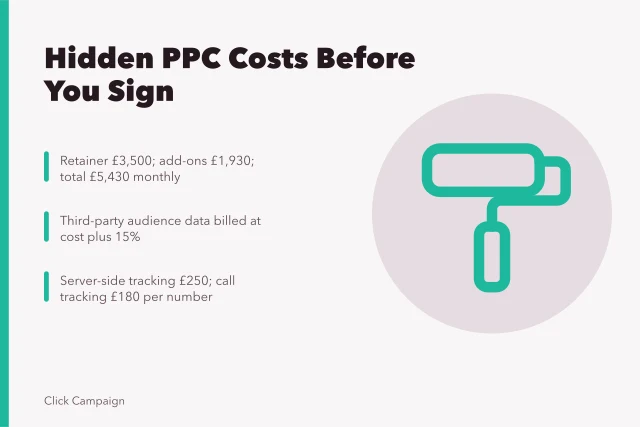
Before you lock the columns, the write-up of PPC agencies hidden costs sets out the charges that tend to appear after signature.
Where the forecast numbers come from
Auction and platform data
Keyword-level CPC ranges beat a single blended average. Google's explanation of how Ad Rank is calculated says position depends on bids, ad quality and the expected impact of extensions and formats at auction time.
The same keyword can cost different amounts at each auction. Model low, mid and high CPC assumptions, then test the plan against each.
A blended average hides that spread, and it is the spread that breaks a quarterly plan.
Consent and tracking costs
Conversion tracking that relies on cookies needs a lawful basis under UK electronic marketing rules, so budget for a consent platform and developer time to connect it. The ICO guide to PECR is the reference to read before assuming existing tags still fire.
For example, a mid-sized account may need £600 to £1,200 of set-up work (illustrative). Consent rates also change measured conversions, which changes reported cost per acquisition.
Keeping the template usable
Ownership, refresh cadence and version control
Give each tab one named owner, refresh monthly before the invoice run, and rebuild the forecast quarterly. Version by quarter rather than by edit, so month-on-month comparisons survive.
A shared drive folder with one live file beats a chain of emailed copies. If paid social sits alongside search, the ad tips LinkedIn publishes describe how targeting and creative choices work there, so give that channel separate assumptions.
The PPC agencies costs and budget guide for England explains the fee models behind the retainer line. Read it before a client asks why one agency quotes more than another for the same account.
Glossary: terms to fix before you share the sheet
Glossary terms
- Media spendmoney paid to the advertising platform, before any agency charge.
- Management feethe agency charge for planning, buying and reporting.
- Ad Rankthe auction calculation that sets ad position and the price paid.
- Contingencyunallocated budget for auction inflation or approved tests.
- Billing entitythe legal entity that raises the invoice, which affects VAT.
Common questions
Should VAT sit inside each line?
No. Show it as its own row, because platform invoices and agency invoices may come from different entities. Ask your finance team to confirm the treatment for each supplier.
How often should the forecast be rebuilt?
Rebuild quarterly and refresh monthly. Auction costs move with seasonality and competitor entry, so a forecast built in January should not carry through to October unchanged. Keep the earlier version for comparison.
Who owns the budget template?
Usually the account lead, with finance as approver. Two owners is how duplicate rows and stale assumptions appear.
What if the client buys media directly?
Keep the fee, tracking and contingency blocks, and drop the media spend block. The summary tab still totals what the client pays, which is what the conversation needs.