Tools and providers
Part of Choosing a Google Ads agency for ecommerce: UK retailer checklist
Choosing a Google Ads agency for ecommerce: UK retailer checklist
Choosing a Google Ads agency for ecommerce means checking Shopping feed skills, UK retail seasonality and fee models. A practical checklist for online stores.
What to take away
- Pick an agency that can show live Shopping and Performance Max campaigns for online stores, not just text ads.
- Ask how it plans for Black Friday, Christmas delivery cut-offs and the January sales.
- Feed quality in Google's shopping feed drives more results than bidding cleverness alone.
- Check consent, tagging and data protection before you share customer data.
- Report on revenue and margin rather than clicks and impressions.
Why online stores need a different agency
A generalist agency can run a sound search campaign. An ecommerce account adds product feeds, feed diagnostics and budget control across hundreds of SKUs. Those tasks sit outside most small-agency playbooks.
The Office for National Statistics tracks retail sales for Great Britain, including the split between store and non-store spending. Use its data to check whether your own seasonality matches the wider market.
UK online retail concentrates spend into a few weeks. Black Friday lands in late November, Christmas delivery cut-offs follow in mid-December, and the January sales reset demand in the first fortnight of the year. An agency that reviews budgets monthly will always react late.
| Period | What to prepare |
|---|
UK ecommerce retail calendar
- OctoberFeed clean-up, stock checks, budget caps
- Black Friday weekPromotion extensions, hourly pacing, bid caps
- DecemberDelivery cut-off messaging, gifting audiences
- JanuaryClearance feeds, new customer offers
What to ask before you sign
- Walk me through a live product feed, including disapproved items and feed errors.
- Give me two UK retail references, and let me check their numbers.
- Show how you set up consent and conversion tracking.
- Confirm who owns the Google Ads account, the feed and the tags.
- Set out the first 90 days, including the tests you will run.
Ask for a short audit before you sign anything. An outside view of account structure, negative keywords and feed health costs little next to a year of wasted spend. Our guide on how to audit a PPC agency lists the checks that matter.
Pre-signing agency questions
- Walk through a live product feed
- Two UK retail references with numbers
- Consent and conversion tracking setup
- Who owns account, feed and tags
- First 90 days and planned tests
Shopping ads, feeds and marketplace spend
Google Shopping and Performance Max carry most ecommerce spend. Both depend on the feed, so titles, descriptions, GTINs and availability data must be complete.
Marketplace ads sit alongside Google. Plenty of UK retailers run Amazon and eBay campaigns in the same week, and budget should follow incremental profit rather than channel loyalty. Ask how your agency splits spend between the two.
Product pages matter as much as bids. A feed can send traffic to a page that loads slowly or shows the wrong price, and no bidding strategy fixes that.
Currency settings deserve a check too. Bidding in pounds keeps reporting simple, and a UK-focused campaign should not compete with dollar-denominated budgets from a sister site.
Costs, fee models and contracts
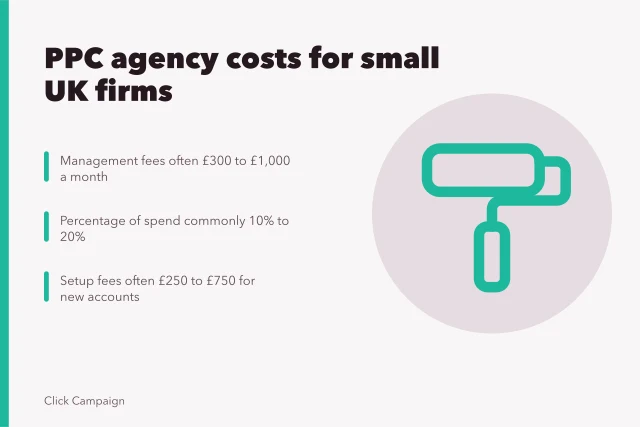
Agency fees usually take one of three shapes: a monthly retainer, a share of ad spend, or a blend. Illustrative figures only: £1,500 to £3,500 a month, or 10% to 15% of spend once budgets pass £30,000 a month.
Watch contract length. Twelve-month lock-ins are common, yet ecommerce results arrive faster than that. A three-month review point protects you if performance stalls.
Compliance, tracking and ad claims
UK advertising rules apply to every promotion you run. The CAP code covers price claims, discounts and availability, so a "was £80, now £50" badge needs evidence behind it. The advertising codes page on the Advertising Standards Authority site sets out the rules.
Consent sits alongside the creative. The ICO's guidance for organisations explains the lawful basis you need before tags collect customer data, and a cookie banner must appear before those tags fire.
Agencies quote results freely. A credible PPC agency case studies page names the sector, the period and the metric that moved. Claims of "4x growth" without those details tell you nothing.
Common questions
How much does an ecommerce PPC agency cost in the UK?
Most charge a retainer or a percentage of ad spend. On a £20,000 monthly budget, a 12% fee equals £2,400 a month, though rates vary by scope.
Should I pick an agency that specialises in Shopping ads?
Yes, if your revenue comes from product listings. Feed work, product-level bidding and Performance Max asset groups are specialist skills, and a generalist will learn on your budget.
Can one agency run Google Ads and marketplace ads?
Often, yes, but check the platform credentials and the reporting. Ask whether Amazon or eBay fees sit inside the same fee structure, because that changes the true cost.
What should the first 90 days cover?
Feed clean-up, conversion tracking checks and a test plan for the next peak. A sensible agency will name the dates it is working towards, such as Black Friday or the January sales.