Tools and providers
Part of A buyer's guide to PPC agency tools and providers
How should PPC agencies tool implementation work for England clients?
How PPC agencies tool implementation works: inventory, acceptance criteria, staged rollout, platform change checks and UK advertising compliance.
What to take away
- Google keeps changing Ads features and tracking, so implementation is a running process, not a one-off switchover, as its new features and announcements page shows.
- UK advertising rules cover paid search copy, so the CAP Code sits inside implementation, per the ASA's explanation of the co-regulatory system.
- Each tool needs an owner, a test window and a rollback path before it touches live spend.
- LinkedIn is a separate buying surface, so it needs its own self-serve ads setup rather than a copy of the Google Ads build.
- Write acceptance criteria before choosing the tool, because nothing else proves it works.
Map the tools you already run
Tool inventory checklist
- Search platforms
- Bid tools
- Feed systems
- Consent tooling
- Reporting layers
- Contract owner and admin access
Record who owns each contract, who holds admin access and when it last changed. Most implementation delays come from access gaps, not technical limits.
Group entries by function rather than vendor name: bid management, feed handling, creative testing, consent, and reporting. Two tools doing the same job create a cost problem and a data problem.
If that list is still open, the PPC agencies tools and providers guide sets out the categories.
Set acceptance criteria first
Acceptance criteria are the tests a tool must pass before going live. Write them for your account, not the vendor's demo.
Acceptance criteria essentials
- Pass mark for each test
- Test window defined
- Named sign-off person
- Rollback trigger agreed
- Who switches tool off
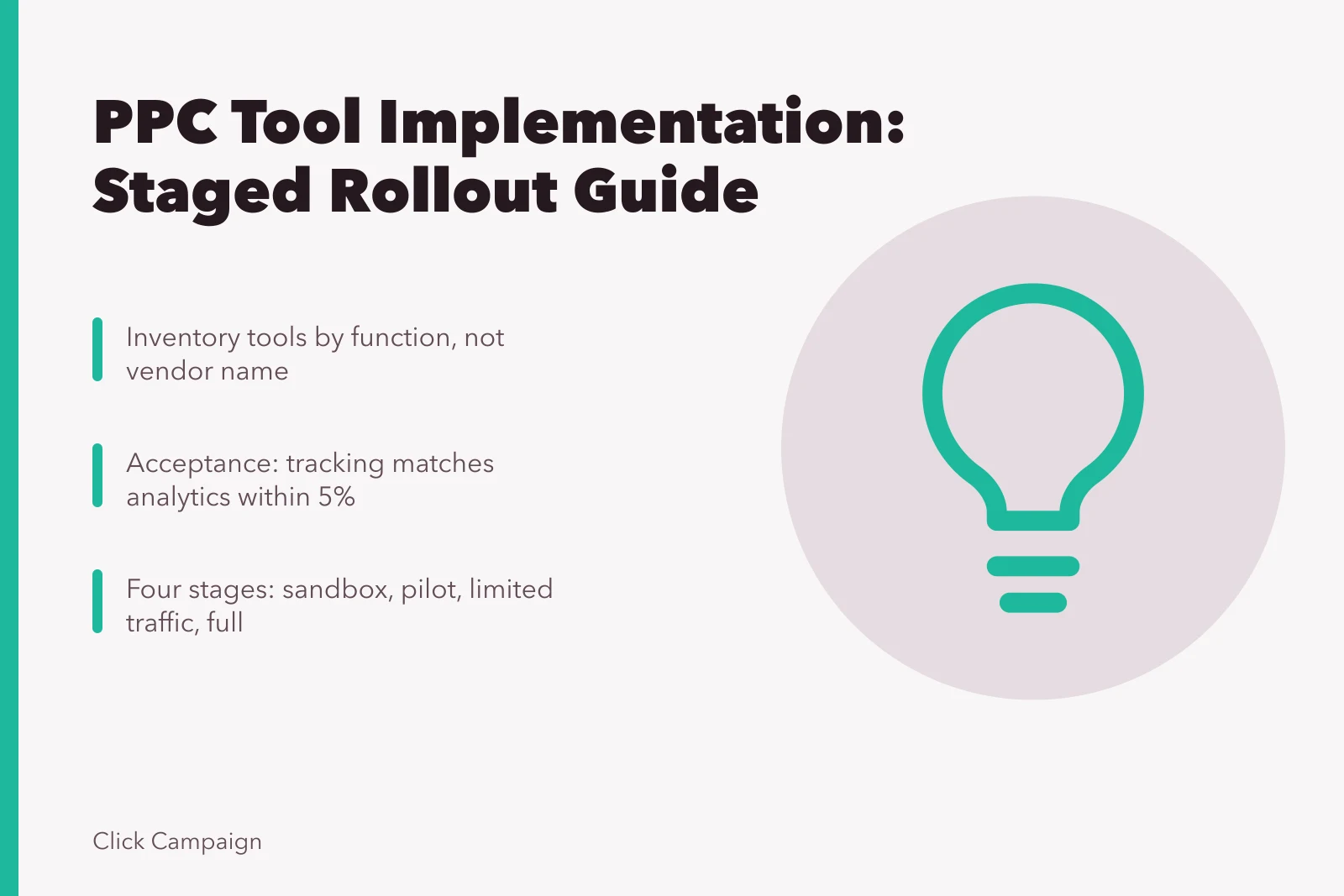
For example, a team paying £2,000 a month in media might require tracking to match analytics within 5% over two weeks. That target is illustrative.
Give each criterion a pass mark, a test window and the person who signs it off. Numbers settle disputes that opinions cannot.
Agree the rollback trigger at the same time, naming who switches the tool off.
Sequence the rollout in stages
Implementation normally runs in four stages: sandbox, pilot, limited traffic, then full account. Do not skip the pilot.
CAP pilot spend at a small share of the live budget. Keep limited-traffic running until tracking reconciles with analytics.
What to test in the sandbox
Sandbox testing covers tag firing, conversion de-duplication, audience imports and permission levels. Use a small, low-spend campaign so mistakes stay cheap.
What to check before full rollout
Confirm that naming conventions match your reporting, that historical data is not overwritten, and that the consent tool fires on every page. Reporting joins are the usual weak point, so test them before you scale spend.
Monitor platform changes after launch
A tool that passed testing in March can fail in June. Search platforms ship updates to bidding, tracking and reporting continuously.
Schedule a monthly look at platform release notes and a quarterly re-test of your conversion paths. Assign that check to a named person.
Keep a change log, so a reporting gap can be traced to the release that caused it.
Due diligence continues past procurement, which is why the checklist in PPC agencies vendor due diligence in England is worth revisiting at each renewal.
Keep compliance inside the build
Paid search ads are UK advertising, so the CAP Code applies to headlines, descriptions and landing pages. The ASA regulates that system with the Committee of Advertising Practice.
Build compliance checks into the implementation checklist: substantiation for claims, correct pricing statements, and sector rules for finance or health clients.
Record who approved each ad template and when, so an audit trail exists for later queries.
A compliance review should run before a new ad template goes live, not after a complaint arrives.
Decide what to implement now
The table maps common situations to a sensible choice and a tempting option to avoid.
Weigh each row against your own contract dates, team size and reporting stack before you commit.
Choose
- Single market, steady spend
- One bid tool, tested in pilot
- Multi-platform buying
- Shared naming and taxonomy first
- Regulated sector client
- Compliance sign-off in the build
- Agency-wide rollout
- Staged migration with rollback
- Renewal due in under 60 days
- Re-test current tools
Avoid
- Single market, steady spend
- Stacking three overlapping bid tools
- Multi-platform buying
- Platform-specific naming that blocks reporting
- Regulated sector client
- Adding compliance as a final check
- Agency-wide rollout
- Big-bang switchover on a live account
- Renewal due in under 60 days
- Signing a new annual contract first
Common questions
How long does implementation usually take?
For a mid-sized account, allow four to eight weeks from sandbox to full rollout. Complex tracking or multi-market setups take longer.
Who should own tool implementation?
A named paid search lead should own the plan, supported by analytics and consent owners. Avoid splitting ownership without a single decision maker.
Do we need legal review before switching tools?
Only if the tool touches personal data, contracts or regulated claims. Otherwise a documented acceptance test and a rollback plan are usually enough. Bring contracts into that review when the tool changes who processes data.
What should we do if a platform changes mid-rollout?
Pause the rollout, re-run the affected tests and record the change. Resuming without re-testing causes most tracking gaps after launch. Block the next stage until those tests pass again.